Circular Procurement for Local Government
Circular procurement encourages councils and communities to apply circular economy principles when sourcing products and services. It moves beyond simply buying recycled content to prioritising solutions that design out waste and pollution, keep materials in use for longer, and regenerate natural systems.
By adopting circular procurement, councils support local businesses, stimulate local job creation, and accelerate progress toward sustainability and net zero goals.
Phase I: Understanding the Landscape
Phase I explored the state of circular procurement across the region, identified best practice, and highlighted opportunities for councils to embed circular principles, collaborate across council boundaries, and strengthen local supply chains.
Key learnings from Phase I showed that:
- Local governments are well placed to embed circular economy principles into procurement, helping to build markets for circular products and services.
- Cross-council collaboration creates opportunities to share costs, drive innovation, and achieve economies of scale.
- Councils are eager to support local suppliers and strengthen local economies.
Phase II: Turning Insight into Action
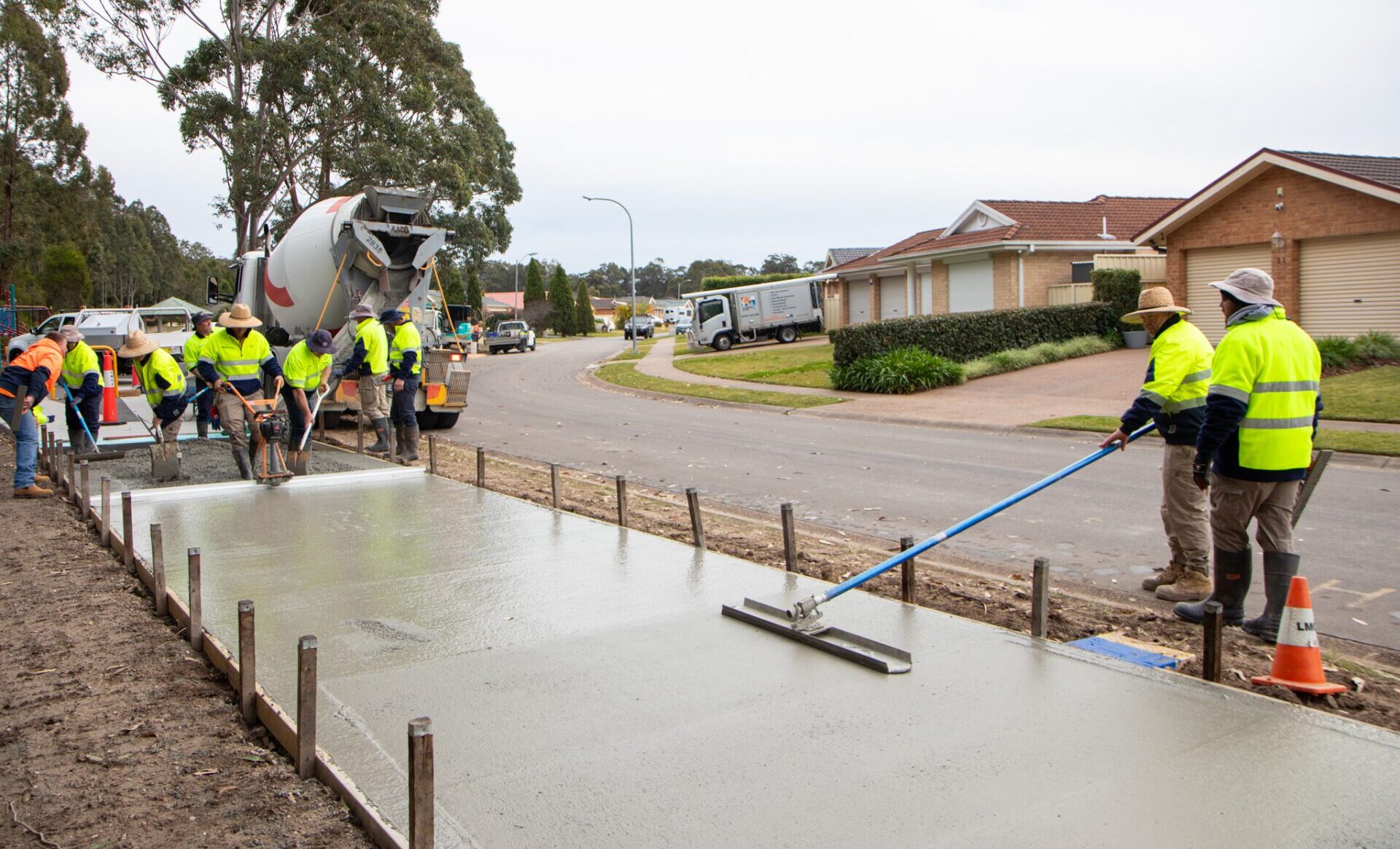
Phase II identified procurement barriers, engaged local suppliers, created opportunities for council–supplier collaboration, worked with the NSW Department of Climate Change, Energy, the Environment and Water, and leveraged industry and academic partnerships. This phase focused on understanding and addressing barriers to the uptake of circular products and solutions by councils. A key focus was Low Carbon Concrete (LCC) – a high‑impact material widely used in council projects. The project demonstrated how adopting LCC could significantly reduce scope three emissions and support net zero ambitions.
This project is an initiative of the NSW Environment Protection Authority under the NSW Government’s Waste and Sustainable Materials Strategy and is funded from the waste levy.
The project delivered a Circular Procurement Toolkit to help councils embed circular alternatives into procurement decision‑making.

The Hunter JO Circular Procurement Toolkit is a comprehensive, practical resource designed to help councils embed circular economy principles into everyday procurement. It explains the foundations of circular procurement such as eliminating waste, designing for durability, enabling repair, reuse, refurbishment and remanufacturing and aligns these actions with NSW policies including the Waste and Sustainable Materials Strategy and the Decarbonising Infrastructure Delivery Policy.
The toolkit provides clear guidance across the procurement lifecycle through five detailed guides, covering circular procurement essentials, the procurement pathway, fair and proportionate evidence requirements, low‑carbon concrete procurement, and a framework for developing future material‑specific modules. It also introduces key tools such as the Material Circularity Indicator (MCI), tiered evidence levels, product stewardship expectations, and model contract clauses to support consistent and achievable circular outcomes.
Supporting documents, including supplier information forms, procurement checklists and case study templates, translate the principles into practical steps for council officers, engineers, asset managers and procurement teams. These tools help staff challenge the need for new purchases, engage markets early, specify and evaluate circular options, and monitor delivery to ensure commitments such as durability, repairability, recycled content and take‑back schemes are achieved. The toolkit emphasises proportionate requirements that enable SME participation, prioritises whole‑of‑life value over upfront cost, and highlights how circular procurement reduces waste, extends asset life, strengthens regional resilience and supports local industry development. Together, these resources aim to make circular procurement simple, achievable and integrated into standard council processes.
If you are not a Hunter JO council and you wish to access the MCI tool, please visit Material Circularity Indicator (MCI) calculator | thinkstep-anz
Are you a manufacturer or supplier of recycled content products?
The Choose Circular Directory will help buyers across NSW find and choose more sustainable options.
This free, online directory connects buyers, including government, businesses, and other members of the public with recycled content products across NSW.
Businesses will be able to register and list their products in July, with the Directory launching to the public soon after.